How to Choose the Safest Trampoline for Your Australian Backyard
This page contains affiliate links and we may earn a commission on purchases.
According to a report by consumer group CHOICE, most trampolines on the market fail to meet safety standards.
CHOICE's key findings
- Safety standard failures: Most of the trampolines tested did not meet the Australian safety standard AS 4989:2015.
- Safety features: CHOICE points to proper padding, secure enclosures and springless designs as ways to reduce risk.
- Installation and maintenance: Proper setup and regular checks are needed for ongoing safety.
- Usage guidelines: Supervision and enforcing rules like 'one jumper at a time' are essential for safe use.
- Injury statistics: Trampolines are the second leading cause of play equipment injuries in Australia, with children aged 5-9 most at risk.
- Price doesn't indicate safety: Both cheap and expensive models failed safety tests.
- Push for a mandatory standard: CHOICE advocates for making the current voluntary standard mandatory.
The Australian safety standard
AS 4989:2015, the Australian trampoline standard, sets design and construction requirements, including:
- Padding that fully covers the frame and springs
- No gaps that could trap limbs
- A secure enclosure to prevent falls
- Clear user instructions and safety warnings
Compliance with this standard is voluntary.
Safety features to look for
- Springless design: Models using flexible composite rods instead of metal springs
- Net enclosures: Sturdy, well-attached nets to prevent falls
- Adequate padding: Thick, securely attached padding covering all hard surfaces
- UV-resistant materials: To withstand our harsh sun
- Weather-resistant frame: Galvanised or powder-coated steel to resist rust and corrosion
- Safety pad retention system: To keep pads securely in place
- Soft-edge mat: Reduces impact on joints
- No-gap design: Eliminates spaces where limbs could get trapped
- Rust-resistant springs: If not using a springless design
- Removable ladder: To control access when not in use
Rules for safe trampoline use
Rules that reduce the risk of injury:
- One jumper at a time
- No somersaults or risky stunts
- Always jump in the centre of the mat
- Remove jewellery and empty pockets before jumping
- No jumping onto or off the trampoline
- Adult supervision required at all times
- No use when wet or in windy conditions
Trampoline alternatives
Alternatives to a traditional trampoline:
- In-ground trampolines: Reduced fall heights and blend into landscaping
- Rebounding mini-trampolines: For indoor use; lower impact on joints
- Natural play areas: Create a backyard circuit with balance beams, logs, and climbing structures
Trampoline maintenance
Regular maintenance matters for both trampoline safety and longevity:
- Inspect the mat and springs for wear after heavy rains or extreme heat
- Keep the jumping surface clean of leaves and debris
- Trim nearby plants regularly to prevent interference with the structure
- Consider a cover to protect the trampoline when not in use
Related articles
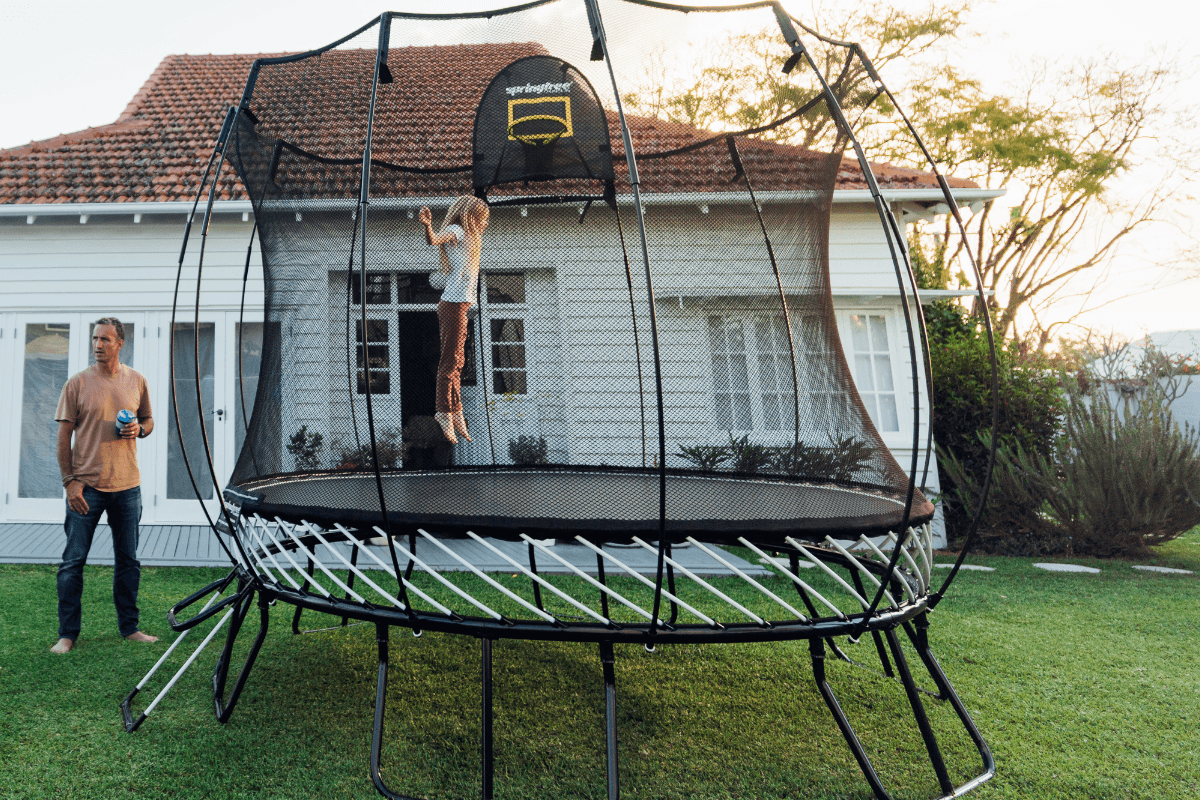
Spring vs Springless Trampolines: Cost, Bounce, Weight Limits and Warranty
How spring and springless trampolines differ in Australia: where the springs sit, what each costs, weight ratings and warranty terms, with real models.

How Much Does a Trampoline Cost in Australia?
What a trampoline costs in Australia in 2026, band by band, with current models, from-prices, spring systems, weight ratings and warranties.
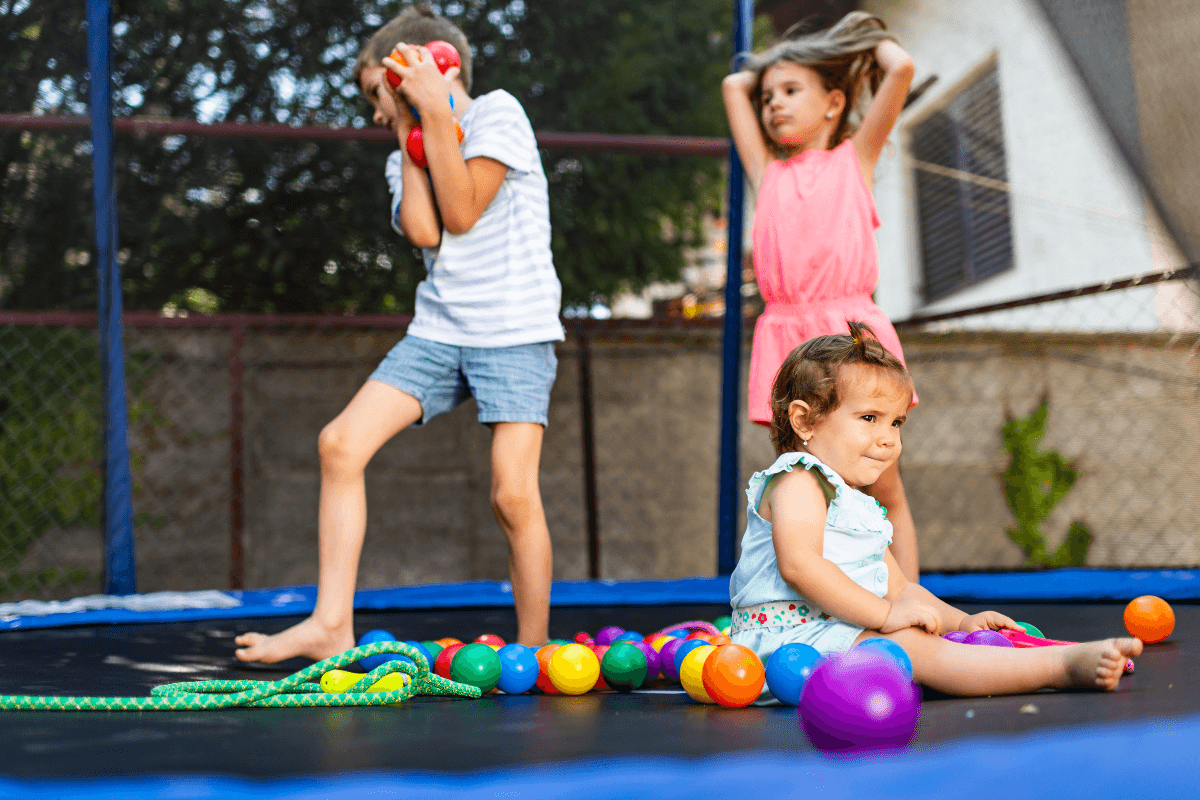
Trampoline Size Guide: Yard Space, Mat Size and Weight Ratings
How much yard a 10 ft or 14 ft trampoline needs once clearance is added, which size suits one child or two teenagers, and what each size band costs.